
The cattle at the heart of Arrawatta
Native Angus.
Chosen for our country.
Chosen for our beef.
For us, better beef begins with how it is raised. Native Angus is our choice for cattle that live on pasture and produce their beef from forage.
Discover their story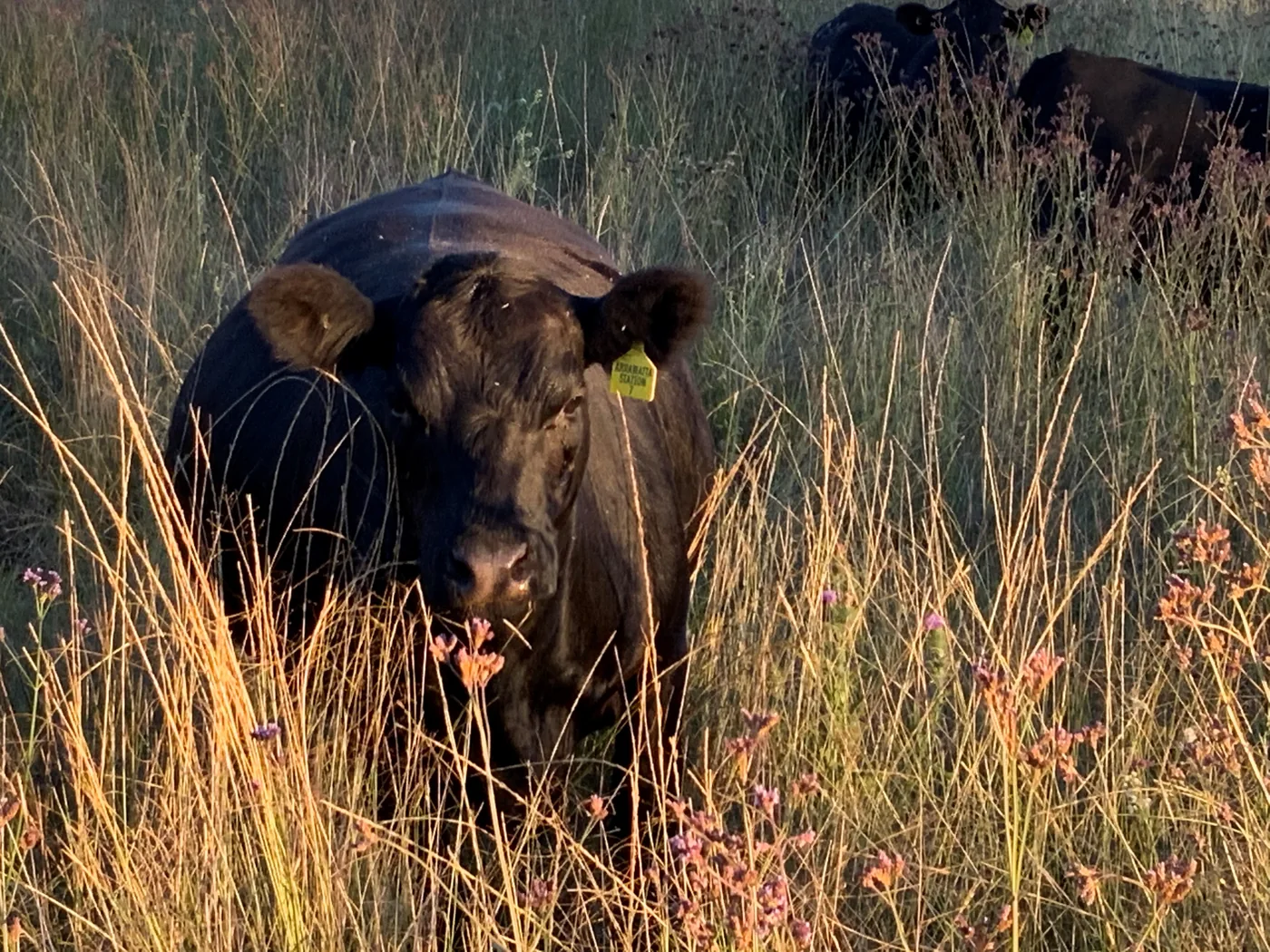
01 / Our choice at Arrawatta
Why we chose
Native Angus.
Quality begins long before the butcher’s block. It begins with the cattle, the life they lead and the feed that sustains them.
At Arrawatta, our cattle are raised and finished on forage, without grain, grain-based supplements or hormonal growth promotants. We want flavour, texture and a finish developed through the animal’s growth on that feed. These choices are part of what better beef means to us.
We chose Native Angus for their Scottish beef-breeding heritage and the British bloodlines they carry. Our breeding is directed towards cattle that suit our country and its forage.
“Native” describes their ancestry. These cattle carry British Angus bloodlines maintained without later overseas Angus introductions into Britain. The same ancestry is preserved in Native Angus bred here in Australia.
About Native Angus conservationRaised and finished
on forage.Pasture and forage are the foundation of our production system. No grain or grain-based supplements.
No hormonal
growth promotants.We work with the cattle’s growth and development on the feed our system provides.
Known throughout
their lives.Born into our herd and kept under Arrawatta’s ownership and management.
02 / North-east Scotland
Bred with
beef in mind.

Aberdeen Angus developed in north-east Scotland through the work of breeders who valued beef quality, sound constitution and the ability to fatten.
William McCombie valued Angus cattle for how well they grew and finished on northern grazing country. He bred for sound constitution, beef production and the ability to fatten. Good feeding from birth also helped cattle reach maturity earlier.
The cattle developed within a working farming system: grazing through the growing season, with turnips, hay and straw among the winter feeds. Sown pasture and improved feeding mattered. The enduring lesson is the importance of matching the animal to its feed and the beef it is intended to produce.
- 1862
A written herd record
The first Polled Herd Book records the cattle and their breeding.
Herd book - 1869
A breeder’s account
McCombie’s Cattle and Cattle-Breeders explains the cattle he valued, how he fed them and the importance of matching cattle to land.
Second edition - 1882
A breed taking shape
MacDonald and Sinclair’s history brings together breeding, husbandry, market reputation and the breed’s development.
Breed history

03 / A reputation for beef
The value was
in the beef.
Angus earned its reputation among breeders, graziers and butchers—and attracted the personal interest of Queen Victoria.
Butchers valued the beef, and market demand and carcass achievements helped build the breed’s commercial reputation.
An account from the breed’s history
1867“her Christmas baron of beef from the carcass of this fine animal”
History of Polled Aberdeen or Angus Cattle
1882 · printed p. 65
Black Prince · Tillyfour, Scotland
Queen Victoria’s
Christmas beef.
In 1867, William McCombie’s Black Prince attracted attention beyond the show ring. At Queen Victoria’s request, the Tillyfour ox was sent to Windsor for her inspection.
The Queen admired the animal and subsequently accepted her Christmas baron of beef from his carcass.
She also visited Tillyfour to inspect McCombie’s celebrated herd.
Read the historical account (opens in a new tab)MacDonald & Sinclair, 1882 · pp. 64–65
04 / Changing markets. Changing priorities.
The market changed.
So did the cattle.

The Scottish cattle found buyers in North America, Australia and New Zealand. Their descendants entered different farming systems, and different markets began to shape the breed.
On the American Great Plains, expanding grain production, transport and meatpacking helped large commercial feedlots grow. Their economics favoured scale and rapid weight gain. American Angus breeders selected for greater growth and carcass weight.
That change in emphasis reached Britain. In 1971, the Aberdeen-Angus Cattle Society opened its Herd Book to imported cattle, and breeders looked to Canada for greater growth potential. Looking back, the Society described some larger, rangier cattle of the 1970s and 1980s as “too extreme and lacking traditional Aberdeen-Angus characteristics”. Breeders later moved towards a more balanced type.
Breeding had followed the market. As overseas bloodlines became widely used in Britain, the older British population became a conservation concern. Native Angus preserves that older inheritance through bloodlines maintained without those later introductions, in Britain and in Native herds abroad.
Read the history behind the changeWhy that matters to us
A different measure
of progress.
At Arrawatta, the qualities we want to carry forward are constitution, the ability to finish on forage and beef people value eating. We have chosen to preserve the bloodlines and build our farming around that purpose. For us, that inheritance is worth more than a place in the history books.
05 / Our breeding direction
Cattle to fit
the way we farm.
We want cattle that grow, mature and develop the finish required for excellent beef from forage. We choose our genetics with that whole life in mind.
Native Angus connects our breeding to a tradition that valued sound constitution and the ability to produce well-finished beef. Conserving those bloodlines keeps that inheritance available to work with today.
At Arrawatta, conservation has a job to do. We carry these bloodlines forward in a working cattle herd. We manage grazing to provide the feed, and breed towards cattle that can make good use of it. The animal, its food supply and the beef belong together.


Dunlouise · 2017
Forage finishing
in practice.
At Dunlouise, grass and clover, winter turnips and hay formed the forage base for the Native Angus herd. Grass-fed steers were supplied to a butcher.
This is the kind of farming that interests us at Arrawatta: bringing cattle through pasture and winter feed to finished beef.
Read the Dunlouise accountOur idea of better beef
Genetics. Forage.
Craft.
The way the cattle are raised is part of the quality we seek. So are the flavour and texture of the beef, its provenance and the care taken after it leaves the farm.
Native Angus provides our breeding foundation. Arrawatta brings cattle and forage together. Native Angus Beef carries the work forward through ageing, butchery and packing in its own Coffs Harbour facility.
Our aim is exceptional beef that expresses those choices, from an animal whose life we know. That is the purpose behind our commitment to Native Angus.
The herd and its records
A known animal.
A recorded connection.
Every animal used for Native Angus Beef is born into the Arrawatta herd and remains under Arrawatta’s ownership and management throughout its life. Each animal carries an electronic NLIS tag and a visual identification tag, with records kept in our livestock-management systems.
Follow the recorded connectionFor the curious
Further
reading.
Explore the breed’s history, the bloodlines being conserved and the people who farm them.
Scottish origins and beef reputation
Ravenscroft, 1862. The Polled Herd Book, volume I. The first herd book records the early cattle and their breeding.
William M’Combie, 1869. Cattle and Cattle-Breeders, second edition. A breeder’s account of cattle, feeding and the land. Read the book ↗
MacDonald & Sinclair, 1882. History of Polled Aberdeen or Angus Cattle. Includes the story of Black Prince and Queen Victoria on pp. 64–65. Read the digitised volume ↗
J. H. Sanders, 1887. The Breeds of Live Stock, and the Principles of Heredity. Includes the Ballindalloch engraving after Steel’s 1884 painting. View the archived illustration ↗
J. J. Ferguson, 1901. “Michigan Agricultural College at the International”, The M. A. C. Record, 17 December, p. 1. A contemporary report of Angus steer Elm Park Lad’s dressed-carcass championship. Read the report (PDF) ↗ ·
Native Angus conservation
Rare Breeds Survival Trust. Native Aberdeen Angus. The breed’s history and the British bloodlines being conserved. Read the breed profile ↗
Changing markets and breeding priorities
Aberdeen-Angus Cattle Society, 2023. “End of an era as Blelack herd dispersed”, The Review, pp. 92–93. The 1971 opening to imports, changes in cattle type and the later move towards balance. Read the Society’s account (PDF) ↗
Decker and colleagues, 2012. A study of selection for growth and carcass weight in American Angus, BMC Genomics 13:606. Read the study ↗
Farming Native Angus at Dunlouise
Aberdeen-Angus Cattle Society, 2017. Dunlouise herd prepares for celebration Native Angus sale. Life with the herd, its forage and its beef. Read the account ↗